

Uptime (the length of time your PC has been on), can help in diagnosing problems or monitoring performance issues on your system, or simply satisfy curiosity. No matter if you use Windows 11 or 10, both graphical and command-line options exist to quickly assess system performance; we will go step-by-step through these methods so you can choose your preference when checking PC uptime on both platforms! Let’s get going now to discover how to check your computer uptime on Windows 11 and 10!
Key Takeaway
Checking your computer uptime on Windows 11 and 10 is straightforward, using either Task Manager or PowerShell as methods of verification. Both provide accurate measurements of how long the machine has been operating.
Graphical Method: Use Task Manager to Find Your Windows Uptime
Checking your computer’s uptime graphically using Task Manager provides an efficient user-friendly method. Here is how to check your computer uptime on Windows 11 and 10 using the graphic method:
- Launch Task Manager by right-clicking the Windows taskbar (the bar at the bottom of your screen) and selecting “Task Manager.”
- If you’re using Windows 11, select the “Performance” option in the left sidebar. For Windows 10, click on the “Performance” tab at the top.

- In the “Performance” tab, you’ll find a section labelled “Up Time.” This section displays the duration your computer has been operating since it was last turned on.
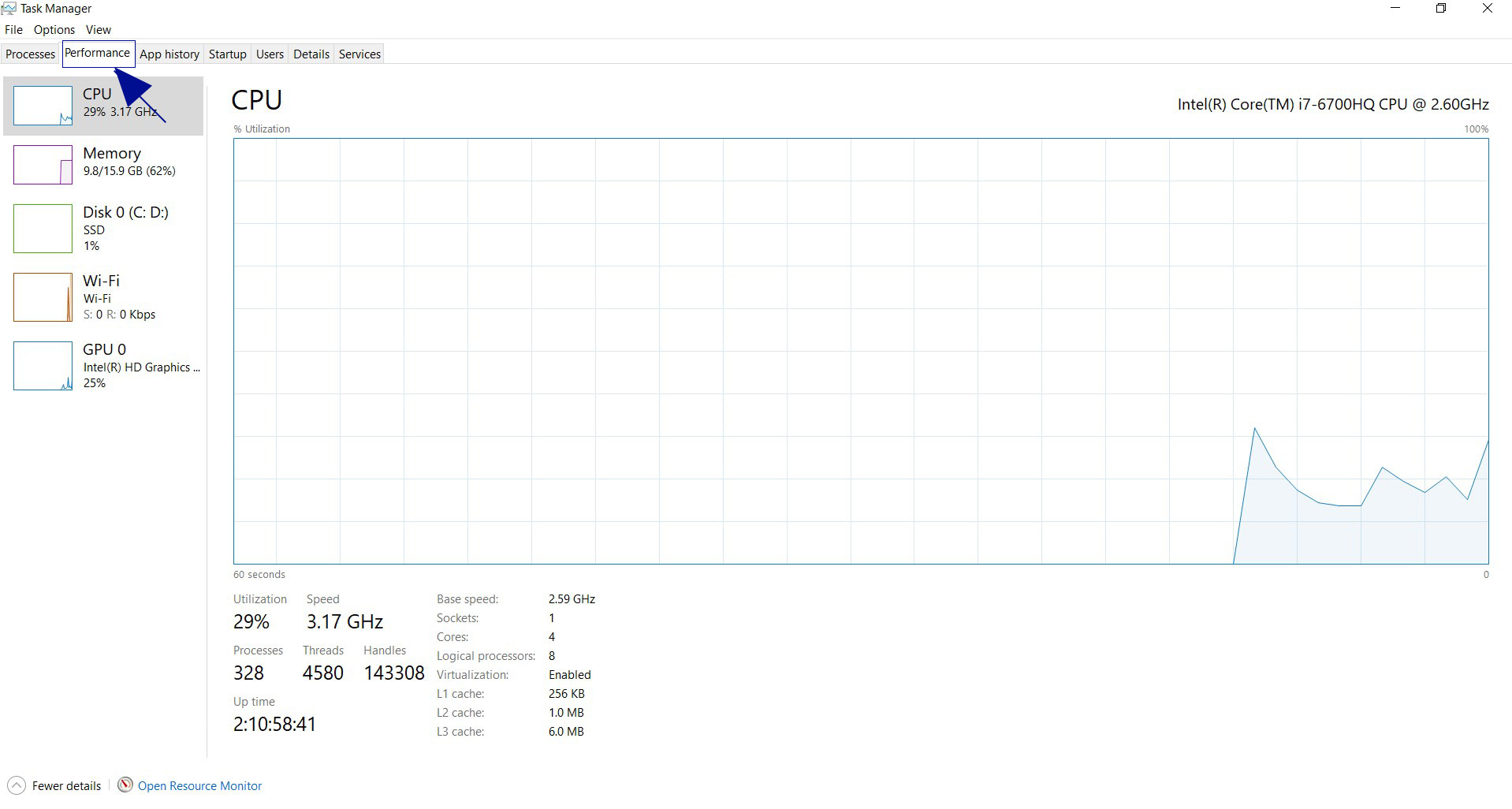
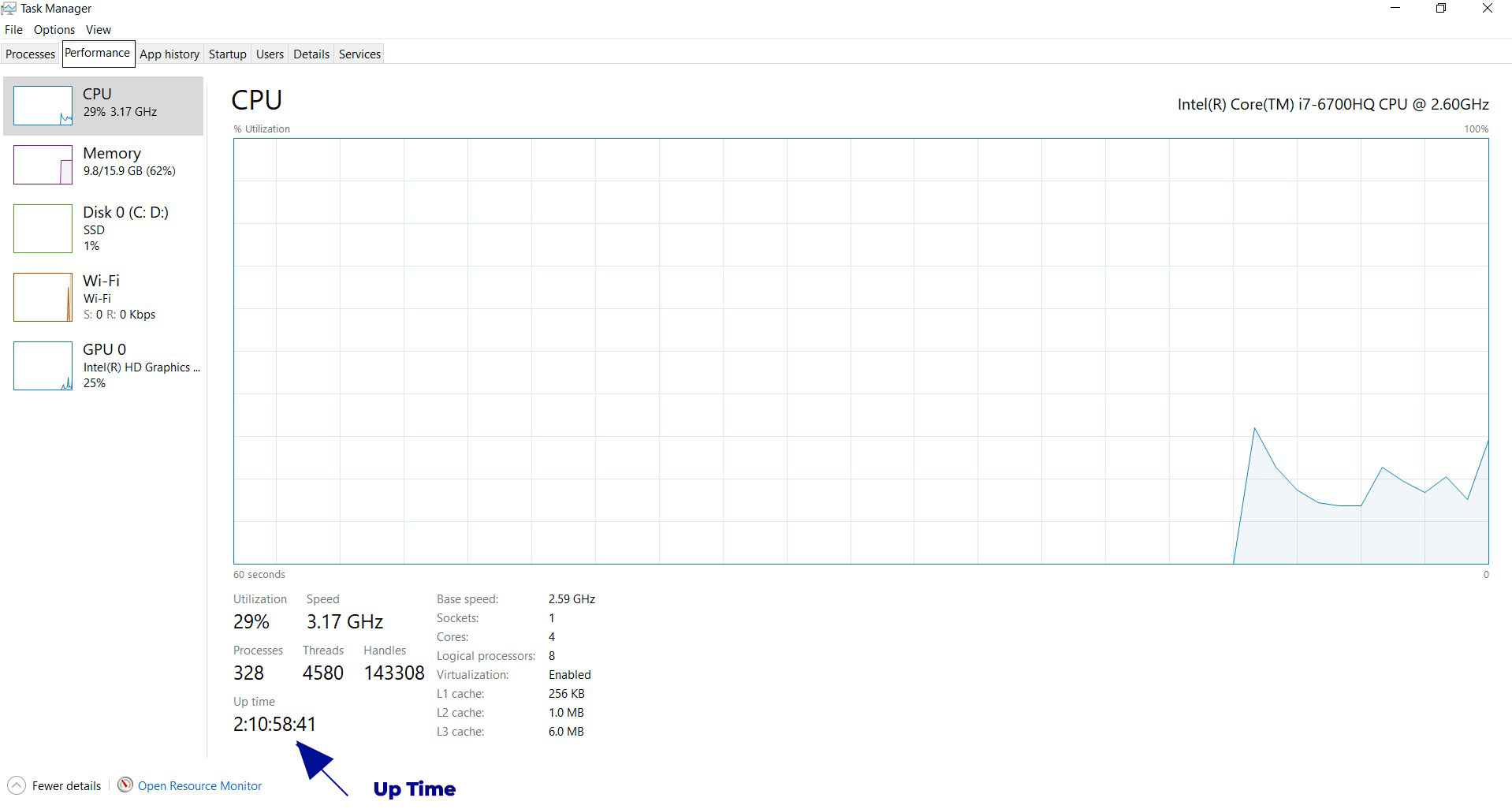
By following these steps, you can easily view your computer’s uptime using the graphical method.
Command-Line Method: Use PowerShell to Check Your Windows Uptime
If you prefer using command-line tools, PowerShell can be used to check your computer uptime on both Windows 11 and 10. Here’s how you can do it:
Open a PowerShell window by searching for “PowerShell” in the Start Menu and selecting the utility from the search results.
In the PowerShell window, type the following command and press Enter:
(get-date) - (gcim Win32_OperatingSystem).LastBootUpTime
This command calculates the time difference between the current date and time and the last boot-up time of your computer.
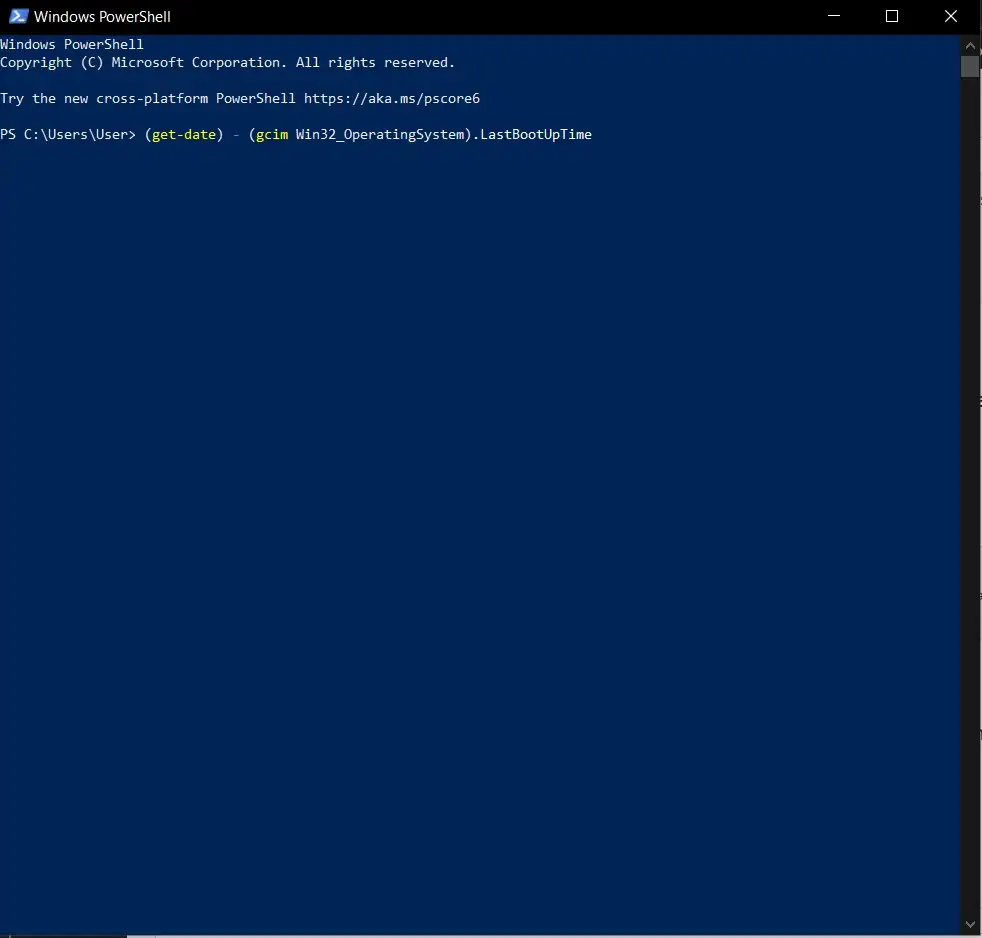
The result will be displayed, showing you the duration of your computer’s uptime.
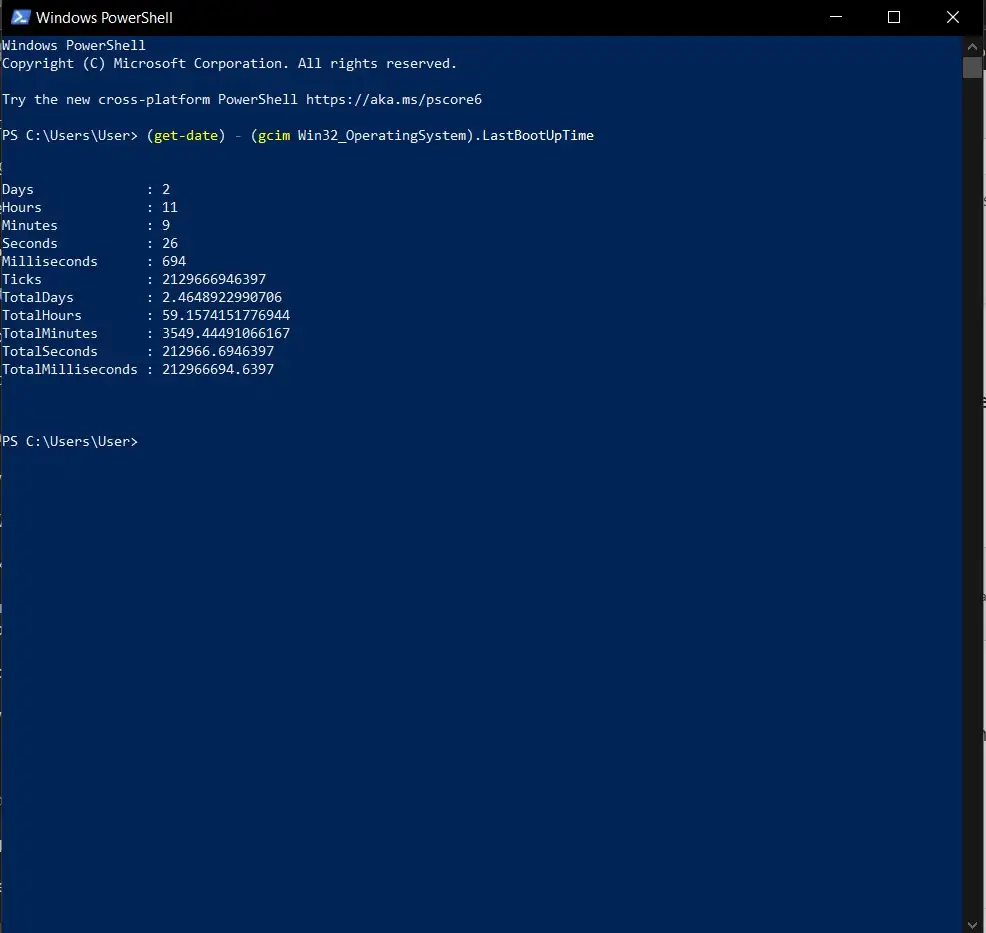
With the command-line method using PowerShell, you can quickly retrieve your computer’s uptime information.
FAQs about how to check your computer uptime on Windows 11 and 10
Q: Why is it important to check my computer’s uptime?
A: Checking your computer uptime can help you troubleshoot issues related to system stability or performance. It provides valuable information about how long your computer has been running without a restart, which can be helpful when diagnosing problems or identifying potential causes of system slowdowns.
Q: Can I check my computer’s uptime on older versions of Windows?
A: Yes, the methods detailed here apply specifically to Windows 11 and 10, although older versions such as 7 or 8 offer comparable methods to track computer uptime. Use either Task Manager or command-line tools available within these versions for monitoring system uptime.
Q: Is there a limit to how long my computer can stay running?
A: Theory suggests a computer can run for years without needing to reboot, yet reboots are recommended periodically in order to apply updates, delete temporary files and refresh system resources – helping ensure peak system performance and stability.
Q: Can I automate the process of checking computer uptime?
A: Yes, scripting or automation tools can help to regularly check the uptime of your computer. By scheduling scripts or tasks to run at specified intervals, retrieval and storage of uptime information can take place automatically – ideal for monitoring purposes or producing reports about it.
Q: Can I check the uptime of remote computers on a network?
A: Yes, using PowerShell, you can check the uptime of remote computers on a network. PowerShell provides commands and modules for remote computer management, allowing you to retrieve uptime information from multiple computers simultaneously.
Q: Does hibernating or putting my computer to sleep affect uptime?
A: No, hibernating or putting your computer to sleep does not affect your uptime. Uptime refers specifically to the time since your computer was last fully powered off and then turned on again. Sleep mode or hibernation mode pauses the system’s activity without actually shutting it down.
Conclusion
In this article, we explored two methods on how to check computer uptime on Windows 11 and 10. Task Manager provides an easy way to monitor computer uptime in a user-friendly interface; on the other hand, using PowerShell gives fast retrieval of uptime information.
Your computer’s uptime provides valuable insight into its performance, allows for quicker issue diagnosis and helps ensure optimal system stability. Both approaches provide easy accessibility.
Remind yourself to frequently monitor the uptime of your system so you can stay aware of its usage and length of operation. Restarts and maintenance sessions may help facilitate an enjoyable computing experience with reduced hassle.
So the next time you need to check your PC uptime in Windows 11 or 10, be confident to employ one or both of these techniques in this article to retrieve this important data.
{
“@context”: “https://schema.org”,
“@type”: “FAQPage”,
“mainEntity”: [
{
“@type”: “Question”,
“name”: “Why is it important to check my computer uptime?”,
“acceptedAnswer”: {
“@type”: “Answer”,
“text”: “Checking your computer uptime canhelp you troubleshoot issues related to system stability or performance. It provides valuable information about how long your computer has been running without a restart, which can be helpful when diagnosing problems or identifying potential causes of system slowdowns.”
}
},
{
“@type”: “Question”,
“name”: “Can I check my computer uptime on older versions of Windows?”,
“acceptedAnswer”: {
“@type”: “Answer”,
“text”: “Yes, the methods described in this article are specific to Windows 11 and 10. However, older versions of Windows, such as Windows 7 and 8, also have similar methods to check computer uptime. You can use the Task Manager or the command-line tools available in those versions.”
}
},
{
“@type”: “Question”,
“name”: “Is there a limit to how long my computer can stay running?”,
“acceptedAnswer”: {
“@type”: “Answer”,
“text”: “In theory, a computer can run indefinitely without restarting. However, it’s generally recommended to restart your computer periodically to apply updates, clear temporary files, and refresh system resources. Regular restarts can help maintain system performance and stability.”
}
},
{
“@type”: “Question”,
“name”: “Can I automate the process of checking computer uptime?”,
“acceptedAnswer”: {
“@type”: “Answer”,
“text”: “Yes, you can use scripting or automation tools to periodically check your computer uptime. By scheduling a script or task to run at specific intervals, you can retrieve and store uptime information automatically. This can be useful for monitoring purposes or generating uptime reports.”
}
},
{
“@type”: “Question”,
“name”: “Can I check the uptime of remote computers on a network?”,
“acceptedAnswer”: {
“@type”: “Answer”,
“text”: “Yes, using PowerShell, you can check the uptime of remote computers on a network. PowerShell provides commands and modules for remote computer management, allowing you to retrieve uptime information from multiple computers simultaneously.”
}
},
{
“@type”: “Question”,
“name”: “Does hibernating or putting my computer to sleep affect uptime?”,
“acceptedAnswer”: {
“@type”: “Answer”,
“text”: “No, hibernating or putting your computer to sleep does not affect the uptime. Uptime refers specifically to the time since your computer was last fully powered off and then turned on again. Sleep mode or hibernation mode pauses the system’s activity without actually shutting it down.”
}
}
]
}
{
“@context”: “https://schema.org”,
“@type”: “HowTo”,
“name”: “How to Check Your Computer Uptime on Windows 11 and 10”,
“description”: “Learn how to check your computer uptime on Windows 11 and 10 using both graphical and command-line methods.”,
“step”: [
{
“@type”: “HowToStep”,
“name”: “Graphical Method: Use Task Manager to Find Your Windows Uptime”,
“itemListElement”: [
{
“@type”: “HowToDirection”,
“text”: “Launch Task Manager by right-clicking the Windows taskbar and selecting ‘Task Manager.'”
},
{
“@type”: “HowToDirection”,
“text”: “Navigate to the ‘Performance’ section in Task Manager.”
},
{
“@type”: “HowToDirection”,
“text”: “Locate the ‘Up Time’ section, which displays the duration your computer has been operating.”
}
]
},
{
“@type”: “HowToStep”,
“name”: “Command-Line Method: Use PowerShell to Check Your Windows Uptime”,
“itemListElement”: [
{
“@type”: “HowToDirection”,
“text”: “Open a PowerShell window by searching for ‘PowerShell’ in the Start Menu and selecting the utility.”
},
{
“@type”: “HowToDirection”,
“text”: “Type the command ‘(get-date) – (gcim Win32_OperatingSystem).LastBootUpTime’ and press Enter.”
},
{
“@type”: “HowToDirection”,
“text”: “The result will be displayed, showing you the duration of your computer’s uptime.”
}
]
}
],
“estimatedCost”: {
“@type”: “MonetaryAmount”,
“value”: “0”
},
“performTime”: {
“@type”: “Duration”,
“value”: “PT5M”
},
“tool”: [
{
“@type”: “HowToTool”,
“name”: “Windows 11 or 10”
},
{
“@type”: “HowToTool”,
“name”: “Task Manager”
},
{
“@type”: “HowToTool”,
“name”: “PowerShell”
}
],
“supply”: {
“@type”: “HowToSupply”,
“name”: “None”
}
}
Discover more from Cloudorian — Android, Samsung & Windows How-To Guides
Subscribe to get the latest posts sent to your email.